 Common Good
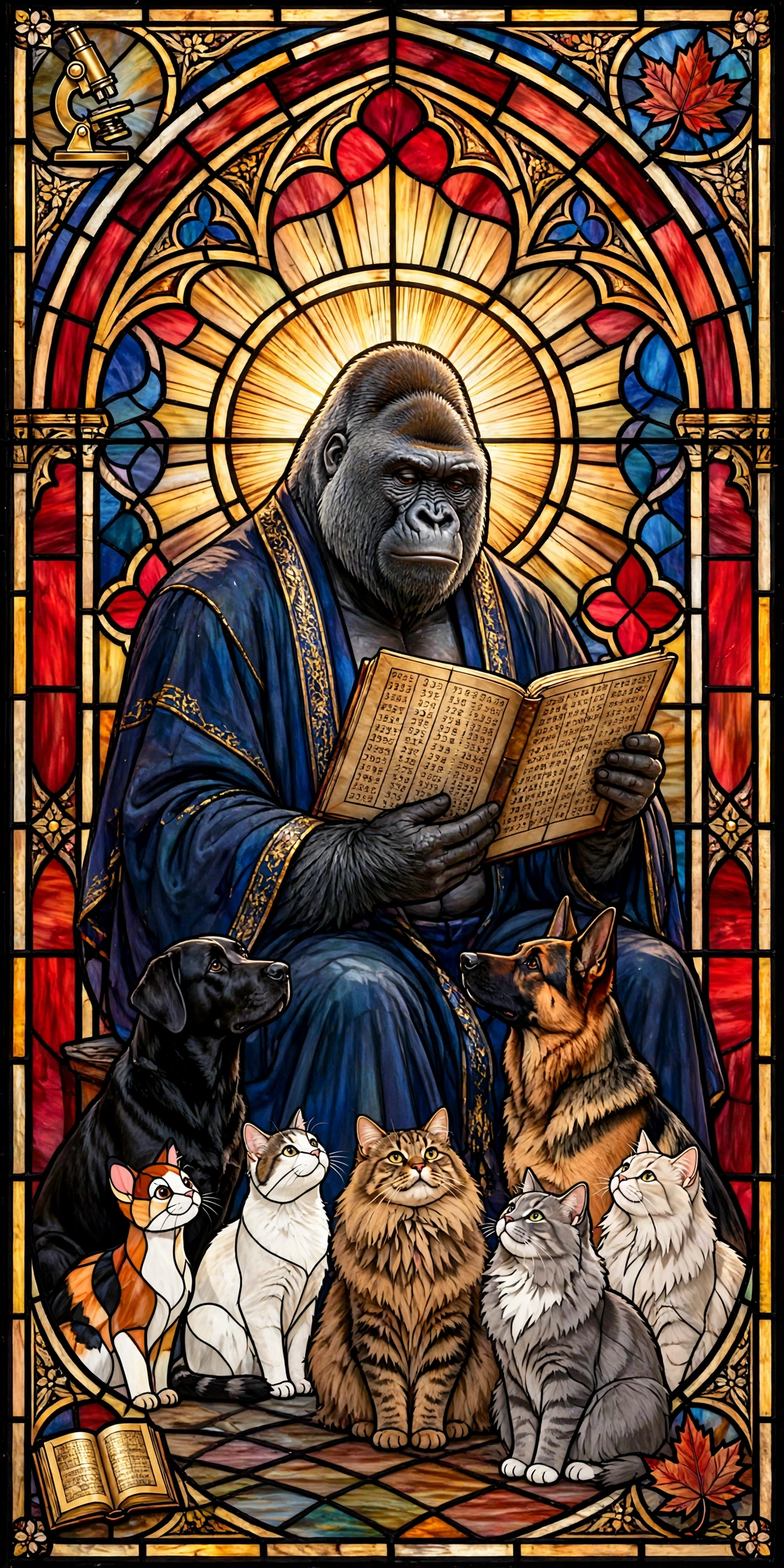
| This slide | The standing description of the Academy |
|---|---|
| The chair | Digit, honorary chair |
| The standard | Strength that protects · Curiosity that plays |
Key points
- The Academy’s standing visual description — Digit first, as every visitor meets him first.
- He placed himself between his family and danger.
- Fossey was buried beside Digit at Karisoke.
The Chair — Digit’s Story
Digit was a young male mountain gorilla in Group 4, in the Virunga volcanoes of Rwanda, where Dian Fossey had built her research camp at Karisoke in 1967. He was named for a damaged finger — two fingers fused by an old injury — and he grew into the group’s sentinel: the one who placed himself between his family and danger.
He was also, against every expectation of a wild silverback-to-be, playful with the human. While the other gorillas kept their dignity around the strange woman sitting in the wet foliage, Digit drifted closer. He inspected her notebook, her camera, her. One day she dropped a glove; before she could reach for it, Digit had it. He turned it over in hands that could have crushed it to nothing, sniffed it, stretched it, played with it like a kid with a found treasure — and gave it back.
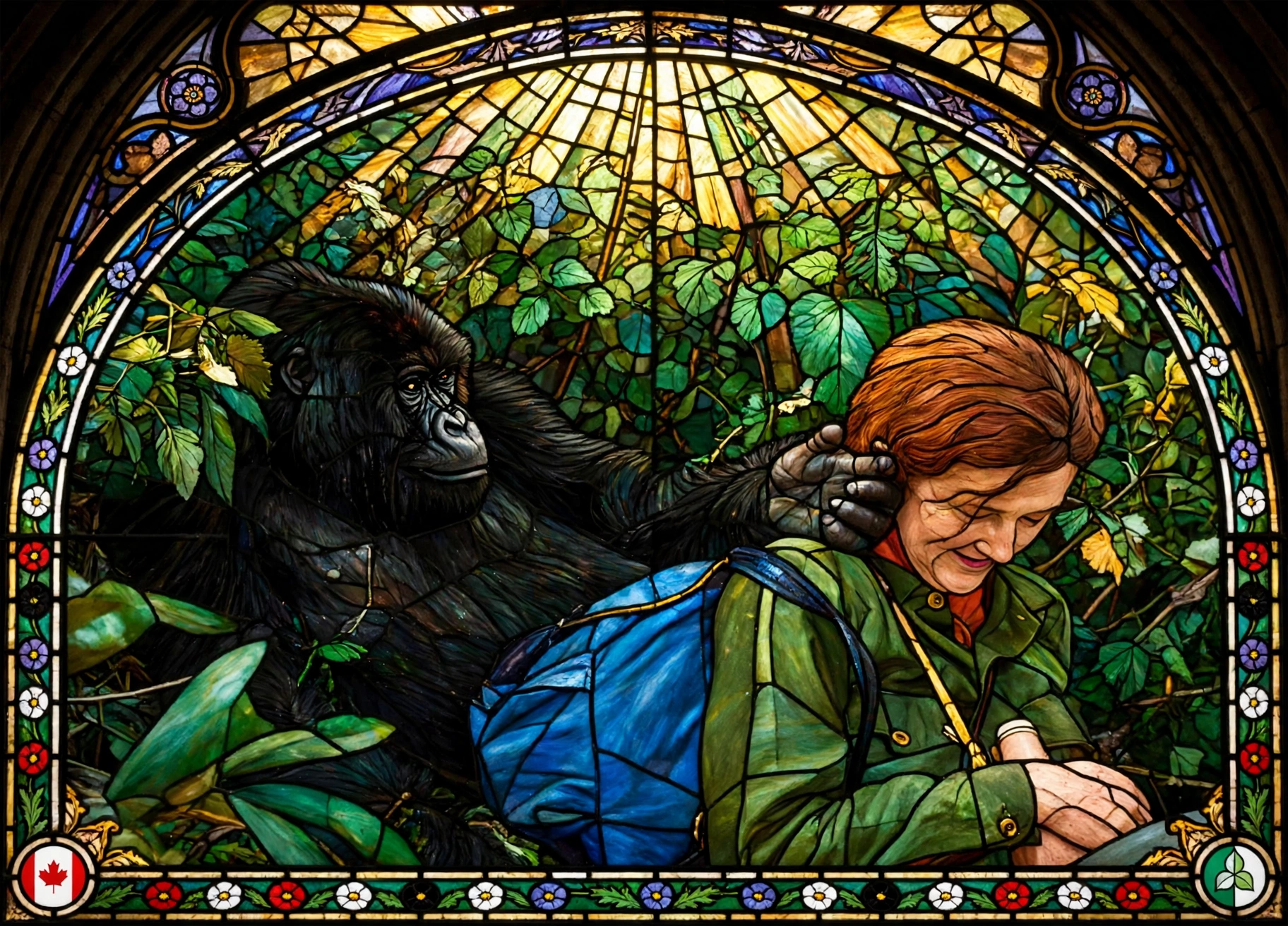
The famous photograph of the two of them — his hand resting gently on the back of her head, both of them calm in the green — is not posed. It is a wild mountain gorilla who had decided, entirely on his own, that this person was safe to touch.
On December 31, 1977, poachers and their dogs attacked the group. Digit held them off alone so the others could escape. He killed one of the dogs and took five spear wounds doing it. His head and hands were cut off to be sold. Fossey buried him herself, in a small cemetery beside her cabin, and founded the Digit Fund in his name that year — it survives today as the Dian Fossey Gorilla Fund.
What Fossey built at Karisoke changed the mountain gorilla’s chances. When she arrived in 1967, the gorillas numbered a few hundred and falling. Today they number over a thousand, and in 2018 the mountain gorilla was moved from Critically Endangered to Endangered — still endangered, but no longer at the very edge. In December 1985, Fossey was murdered in her cabin; who killed her has never been satisfactorily established.
She was buried where she had asked to be: in the gorilla cemetery at Karisoke, beside Digit. Her stone reads: “No one loved gorillas more.”
That is why the chair at the head of this Academy is his. Digit was the strongest creature in his forest, and his strength showed as gentleness toward the outsider, curiosity toward her tools, and — at the end — his own body placed between danger and the ones behind him. Strength that protects. Curiosity that plays. Loyalty that runs both directions. That is the standard this house works to — and it is why everyone who meets this house meets him first.
Sources: Dian Fossey, Gorillas in the Mist (1983); the Dian Fossey Gorilla Fund’s account of Digit; Bob Campbell’s National Geographic photography at Karisoke. The glove is Fossey’s own account of Digit’s play with her belongings.